
Why Dogs Don’t “Listen” Everywhere: Understanding Generalization

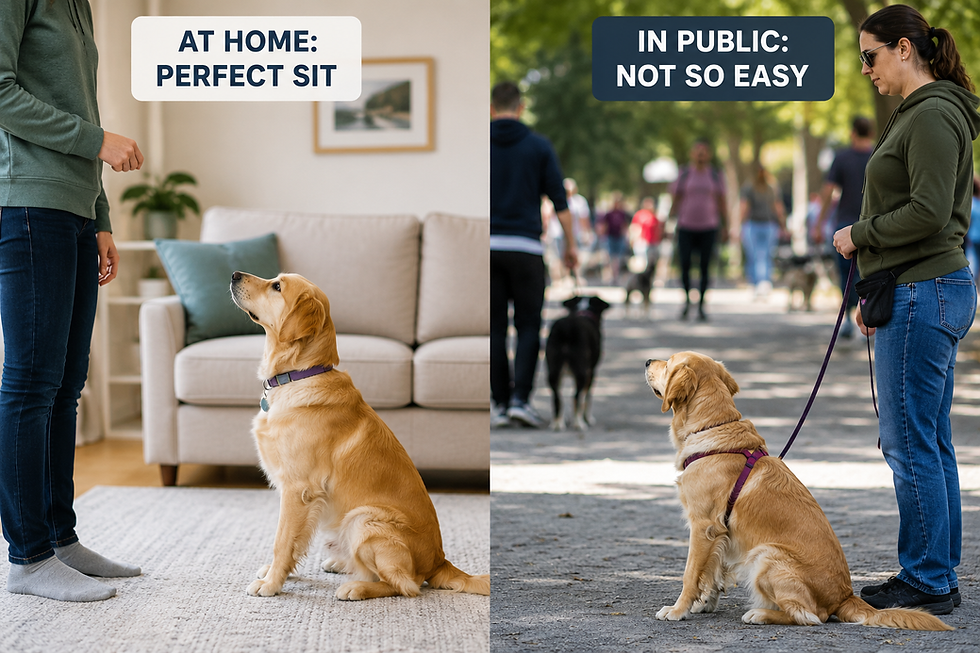
A dog who responds perfectly at home may suddenly struggle in public. This is often due to a lack of generalization, not stubbornness.
Generalization means a dog understands that a behavior applies in many different environments and situations. Dogs learn very specifically. A cue learned in the kitchen may not automatically transfer to:
The park
A training class
Around other dogs
Near distractions
To humans, these situations seem similar. To dogs, they can feel completely different.
For example, a dog may know “sit” at home but struggle outside because:
The environment changed
Distractions increased
Excitement or stress increased
This is why dogs need practice in many different locations.
To improve generalization:
Train in different environments
Start with low distractions
Increase difficulty gradually
Use high-value reinforcement
Keep the dog under threshold
One of the biggest training mistakes is assuming a dog fully “knows” a behavior because they can do it at home. Reliable behavior comes from repetition and practice in real-life situations.



Comments